"*" indicates required fields

949-269-7709Call For A Consultation
Costa Mesa Construction Fraud Lawyer
Trusted Construction Fraud Attorney in Costa Mesa
A Costa Mesa construction fraud lawyer can help when issues arise regarding suspicious billing practices, purchasing irregularities, accounting anomalies, or other behavior impacting a construction project. Construction fraud cases typically involve a thorough review of payment requests, vendor transactions, project documentation, and related evidence.
Engels O’Brien represents businesses, property owners, contractors, and developers accused of fraud and those who wish to investigate suspected fraud involving construction activities.
Hire a Construction Fraud Lawyer
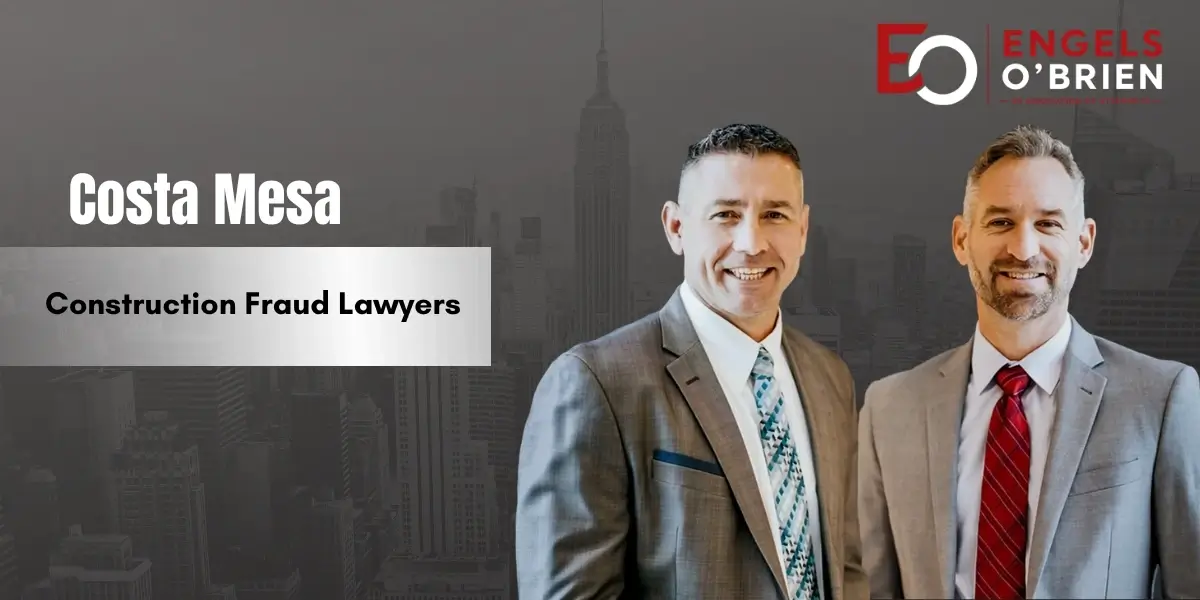
Christopher Engels practiced in the construction industry for 25 years before entering the legal field. This experience gives him firsthand knowledge of project management, contractor operations, bidding and payment practices, and the everyday realities of construction work.
Christopher Engels and Sean Janzen are attorneys at Engels O’Brien who litigate construction disputes in Orange County and Southern California, representing businesses, contractors, developers, property owners, and other parties in complex construction issues.
False Claims Act (FCA) Investigations
Government contracts for public construction work can be complex, including stringent compliance requirements, certifications, and payment applications. When questions arise about the accuracy of information provided in connection with government-funded projects, contractors, developers, and other parties can become targets of False Claims Act (FCA) investigations.
These investigations may relate to billing practices, contract performance, project compliance, or representations made during the procurement process. Companies facing FCA issues often need to review project records, correspondence, and financial documents to understand their exposure and to respond to government inquiries. These matters may arise from audits, agency investigations, whistleblower claims, or issues identified during project reviews.
Bid Rigging & Antitrust Issues
Construction cases sometimes involve claims of bid rigging in a competitive bidding process. These claims generally involve allegations that competitors conspired to rig bids, exchange pricing information, divide markets, or otherwise interfere with a competitive bidding process.
In a construction context, this may be with respect to private development projects, public works, or government contracts. Investigation of these claims may involve analyzing bid documents, subcontractor use, internal communications, and bid procedures. In some cases, claims may lead to civil claims, government actions, or criminal enforcement. Cases involving bid rigging may ultimately be heard in the Orange County Superior Court.
Internal Investigations for Developers or Owners
Developers, property owners, and construction companies may want to look into issues related to financial improprieties, purchasing or project management issues, or suspected employee or third-party misconduct. An internal investigation can help determine whether or not inappropriate behavior took place and the extent of any potential problem.
Depending on the situation, the review may include vendor contracts, payment documents, accounting data, project-related correspondence, and other business records. Internal investigations can also help an organization understand compliance issues and address problems before they turn into more significant disputes. In many cases, an early review of the available information allows decision-makers to determine how to proceed.
Kickbacks, Overbilling & Embezzlement
Allegations of financial misconduct can surface if project money is thought to have been siphoned off, used improperly, diverted, or obtained through fraudulent means. Projects and construction disputes may include accusations of kickback schemes, inflated billing, unauthorized expenses, duplicate payments, or abuse of company resources.
With many projects using multiple vendors, subcontractors, and payment applications, potentially questionable transactions may be identified through a thorough examination of the financial records. Federal Trade Commission data indicates that reported consumer fraud losses exceeded $12.5 billion in 2024.
Although construction-related fraud claims often involve different circumstances than many consumer fraud schemes, allegations involving kickbacks, overbilling, or other financial misconduct can likewise expose businesses and individuals to significant financial losses. Early investigation may reveal discrepancies and help determine whether any improprieties occurred.
Construction Accounting Fraud
Construction projects typically involve significant financial transactions, and proper accounting procedures are vital to the project’s success. Accounting fraud allegations may encompass issues such as falsified financial statements, undisclosed expenses, inaccurate job costing, unauthorized transfers, or intentional misreporting of project finances. Disputes can arise among contractors, developers, property owners, investors, and other parties with financial interests in the project.
The U.S. Department of Justice stated that False Claims Act settlements and judgments exceeded $6.8 billion in fiscal year 2025, highlighting the potential financial consequences of substantiated fraud claims. Reviewing accounting fraud allegations may involve examining bookkeeping records, payment histories, and supporting financial documentation in detail.
Mechanics’ Lien Fraud Allegations
Mechanics’ liens can be valuable tools for contractors, subcontractors, suppliers, and other parties seeking payment for labor, materials, or services provided to a construction project. Disputes can arise, however, when a lien is alleged to contain false information about the amount due, the work performed, or the party claiming a lien.
Fraud claims can arise when a property owner alleges a lien was knowingly overstated or otherwise improperly recorded. Resolving a lien dispute can require reviewing contracts, invoices, payment applications, change orders, and project records. As mechanics’ liens can impact property rights and project financing, allegations over the validity of a lien can have significant legal and financial implications for all parties involved.
Vendor & Procurement Fraud
Relationships with suppliers, vendors, consultants, and service providers are common on construction projects. Claims of procurement-related fraud may occur where issues are raised about conflicts of interest, undisclosed relationships, fabricated vendor information, unauthorized purchasing, or unmerited contract awards.
In some cases, project funds may be impacted by price inflation, duplicate vendors, or payments without legitimate business purpose. Fact-finding around procurement-related issues may involve review of purchase orders, vendor contracts, payment records, bid packages, and internal communications.
California Business and Professions Code § 7028 addresses penalties for acting as a contractor without a license. When investigating procurement-related concerns, contractor licensing status may be one factor considered when evaluating vendor qualifications and project compliance.
Contact a Costa Mesa Construction Fraud Lawyer
Allegations of construction fraud can have serious and varied consequences for construction projects, including financial losses, business disruption, litigation, and regulatory investigations.
Engels O’Brien advises businesses, contractors, developers, property owners, and other parties involved in complex construction-related disputes. We offer practical guidance and strategic legal representation tailored to the specific facts and goals of each matter. Schedule a consultation today to hire a construction fraud lawyer.
Contact Our Firm By Filling Out The Online Contact Form Or By Calling
Request A
Free Consultation
"*" indicates required fields
Call Us
Office Location
2900 Bristol Street,
Suite G205
Costa Mesa, CA 92626
© 2026 Engels O’Brien. All rights reserved.
Disclaimer | Site Map | Privacy Policy Digital Marketing By 
*Images are obtained under license from Canva and other third-party stock image providers, with attribution included where required.